01 · Goals defined together
- Mapping the processes and functions where AI changes the most
- Quarterly goals approved by leadership
- Success measured in running processes, not consulting hours
 aiforwork.ing
Forward Deployed Engineer
The tools change every month, and the gap between what is possible and what your organization actually does keeps widening. In this service we define goals together, and the organization gets a dedicated implementer, a forward deployed engineer, on-site one or two full days a week: sitting with the different functions, building agents on your existing AI systems, and delivering automations and Vibe Coding systems for more complex requirements. Work runs in two-week sprints, and once a month we stop for a retro: reviewing what was done and sharpening the priorities ahead.
What you get: every week another process closes: an agent running, an automation saving hours, or a system reaching its users. And the knowledge stays with you.
Everything is built on the infrastructure you already have, at the security level your organization defined, with a named owner for every deliverable:
Because adoption is not an event, it is a muscle. A project ends on delivery day, and the tools keep changing without it. A dedicated implementer closes another gap every week: goals update based on what actually happens on the ground, knowledge accumulates inside the organization instead of at an external vendor, and employees get a steady address for every idea, issue or process they want off their hands. This is the model known worldwide as a Forward Deployed Engineer: the engineer sits inside the organization, and solutions are built together with the teams rather than delivered from outside.

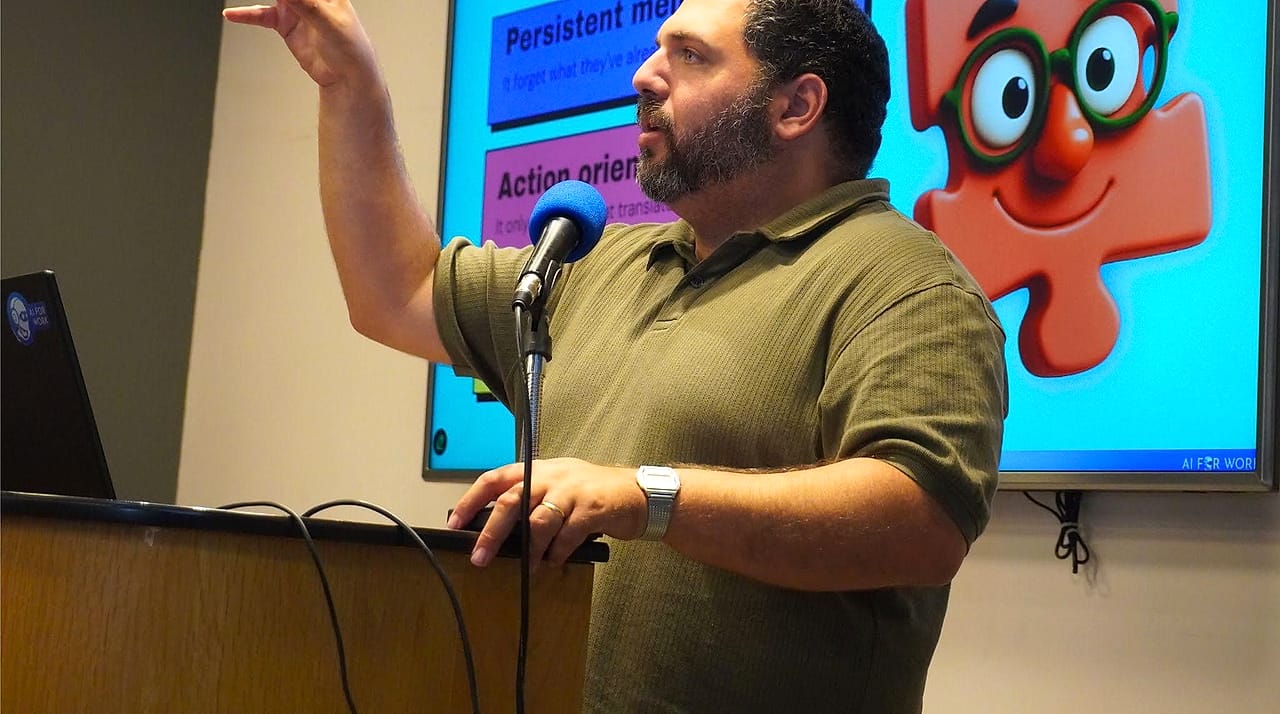
Last week I sat with Ben Rotenberg, an AI expert, for a private session. I was sure I knew AI, but I was wrong. Three hours later, we had built agents that replaced the work of at least two full-time employees.
One or two full days a week, on fixed days, according to the goals we defined together. The regularity is the point: employees know when the implementer arrives, bring real processes, and the work advances every week instead of waiting for the next big project.
Every sprint opens with defined goals and closes with a working deliverable: an agent running, an automation saving hours, or a system in users' hands. Once a month we hold a retro: reviewing what was built, what is actually used, and sharpening the priorities ahead.
On what you already have: the enterprise editions of ChatGPT, Claude, Copilot or Gemini, the automation platforms n8n, Zapier and Power Automate, and MCP connections to internal systems. When a requirement goes beyond what off-the-shelf tools can deliver, the implementer builds a dedicated Vibe Coding solution.
A project ends, and the tools keep changing. A dedicated implementer turns adoption into a process: knowledge stays inside the organization, priorities update in the monthly retro, and every week another gap closes between what the tools can do and what the organization actually does with them.
A leadership sponsor who approves goals and removes blockers, a focal point who coordinates with the implementer, and the function owners themselves: the implementer sits with marketing, finance, operations or service, learns the process from the people who run it, and builds the solution with them.
A short intro call, an initial goal definition, and a proposal for an implementer model that fits your organization.